Two floors of pickle
How my mother's one-room pickle operation grew into an FMCG business, and what I learned building the operating layer around her product.
Two floors of my family's three-storey house in Kathmandu are now occupied by pickle.
Jars cover the shelves. Vegetables arrive in quantities that would make no sense in a family kitchen. During busy seasons, women from our community move through the rooms cutting, mixing, filling, sealing, and packing. We still live on the remaining floor.
This is the part of My Pickle House that photographs well. The less tidy truth is that I did not create the recipes or run production. My mother, Saraswati Adhikari, did. She understood the product. I helped build the business around it: sales, marketing, suppliers, packaging, cash flow, contracts, distribution, and eventually exports.
My Pickle House became my business education. I was studying computer science, had no formal training in operations, and spent two years feeling as if I had aged ten. Most of what I learned came from a shopkeeper saying no, a shipment arriving wet with oil, or demand appearing faster than we could pack it.
The house became the factory
The business began near the end of the COVID lockdown in 2020. Our ward office had organized a training program for local women to learn commercial skills and become more financially independent. My mother had always been interested in business. Before pickle, she worked alongside my father and enjoyed the parts involving people and numbers. She was also a very good home cook, so pickle making made sense.
She first joined three other women from the community. Within a few months, she believed she could develop better products and build a stronger brand on her own. That decision took nerve. Food production during COVID meant extra safety precautions and regular testing, and there was no guarantee that stores would take a new product from a home operation.
Our family invested roughly NPR 500,000. About NPR 50,000 went toward early marketing. Most of the rest paid for ingredients, jars, labels, packaging, and production. We bought no machinery. Everything was done by hand in one room of our house.
The first three products were Mixed Pickle, Methi ko Tusa, and Akabare Pickle. My first contribution was modest. I designed brand assets and packaging, built a website, and created content. My mother was already doing the harder part: making something people would buy twice.
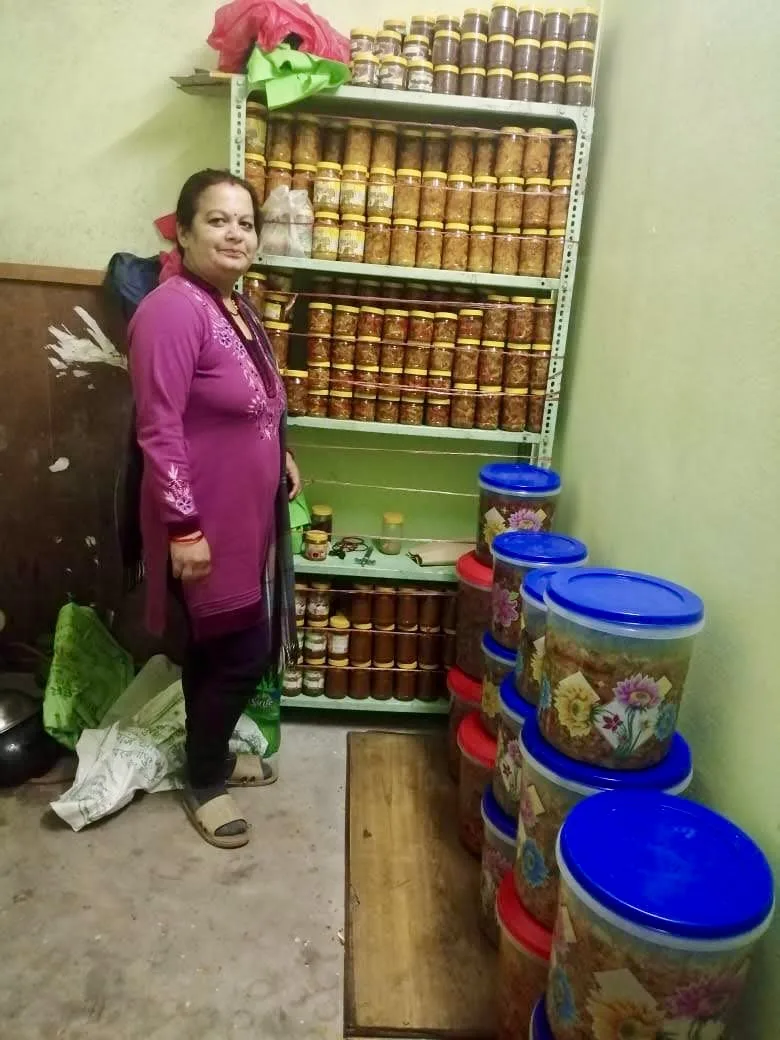
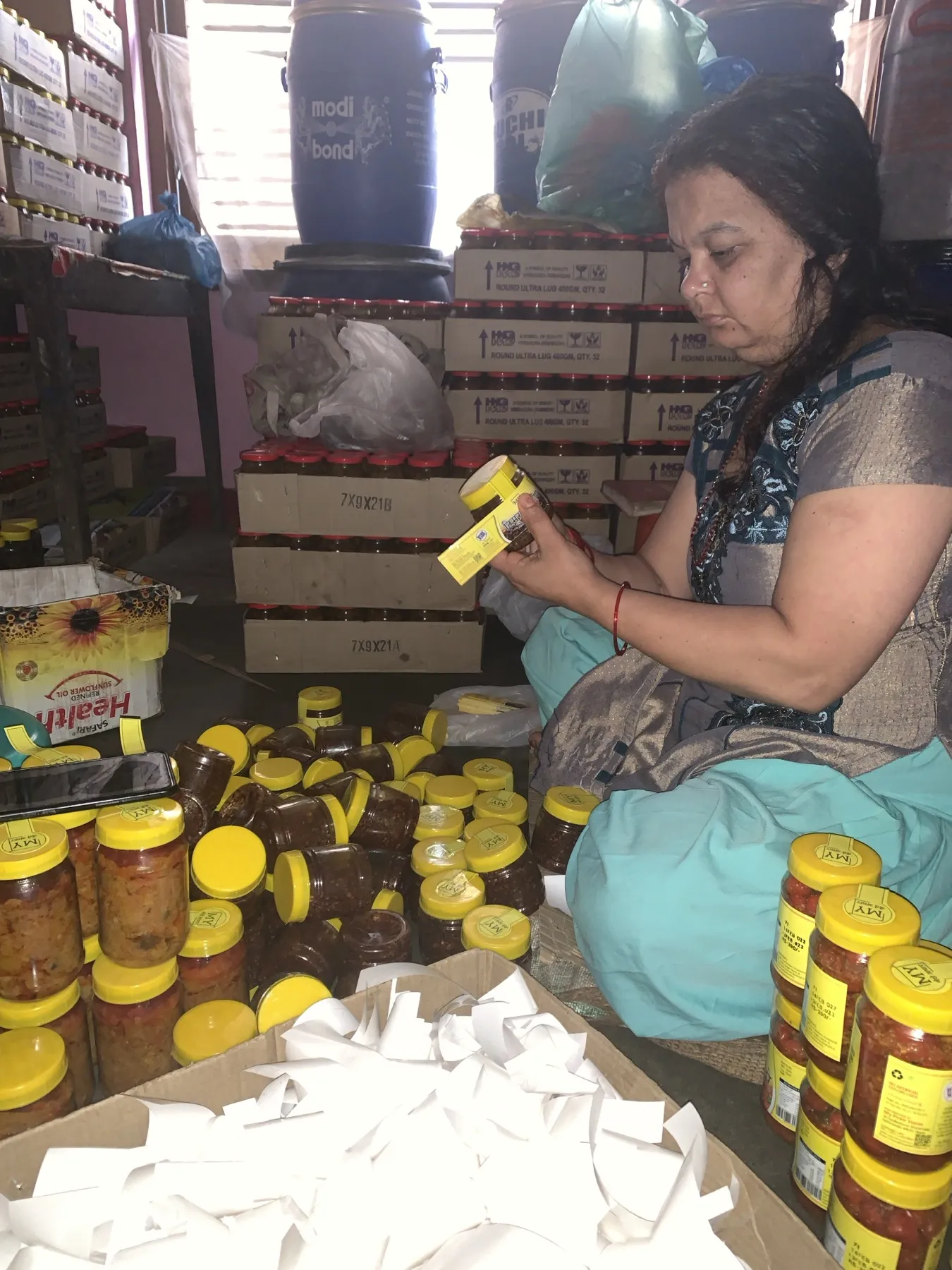
The room eventually became a floor, and then two. That expansion is the most literal measure of what happened. The factory did not replace the house. It slowly took it over.
Demand, one shop at a time
My mother found our first customers by walking into neighborhood grocery stores with jars in hand. She would explain that the pickles had the taste and smell of something made at home, without the artificial colors or flavors common in many mass-market products.
She knocked on more than 200 doors. Within two months, roughly 50 stores had agreed to stock us. By the end of the third month, we were in more than 100.
The rejections still piled up. After one store turned us down, I remembered a tactic I had heard on Shark Tank. Over the next week, we made roughly fifty calls pretending to be customers looking for My Pickle House. Eventually, the shopkeeper called us back.
The tactic got us onto the shelf. It could not create repeat demand. The product still had to earn its place there, and word of mouth began doing what those calls never could.
My mother and I also had our first serious marketing argument. She did not want to spend scarce money on social media. I kept pointing out that people were stuck at home and spending more time online. I finally opened a Facebook account for her so she could see other small Nepali businesses running ads and talking directly with customers.
We began with small Facebook campaigns and PR packages for local creators. Messages and orders grew until we hired someone just to answer customers and keep online orders aligned with stock. My mother did not become a social media person, but she no longer needed me to explain why it mattered.
The first export
Our first international distributor did not come from a trade fair or a polished export strategy. I met his son at the gym.
I learned that his father moved Nepali products to Australia and distributed them there. I became friends with the son that day, then started the much longer process of convincing the family that our product belonged in their shipment. The pickles did most of the convincing. My job was to negotiate prices and contracts, understand the shipping logistics, and make sure production could meet the order.
In 2021, the distributor placed three orders totaling around 2,000 jars under our own label. Seeing the My Pickle House name leave Nepal changed our sense of the possible. Small neighborhood stores had given us proof of demand. Australia suggested that the same home-style taste could travel with the Nepali diaspora.
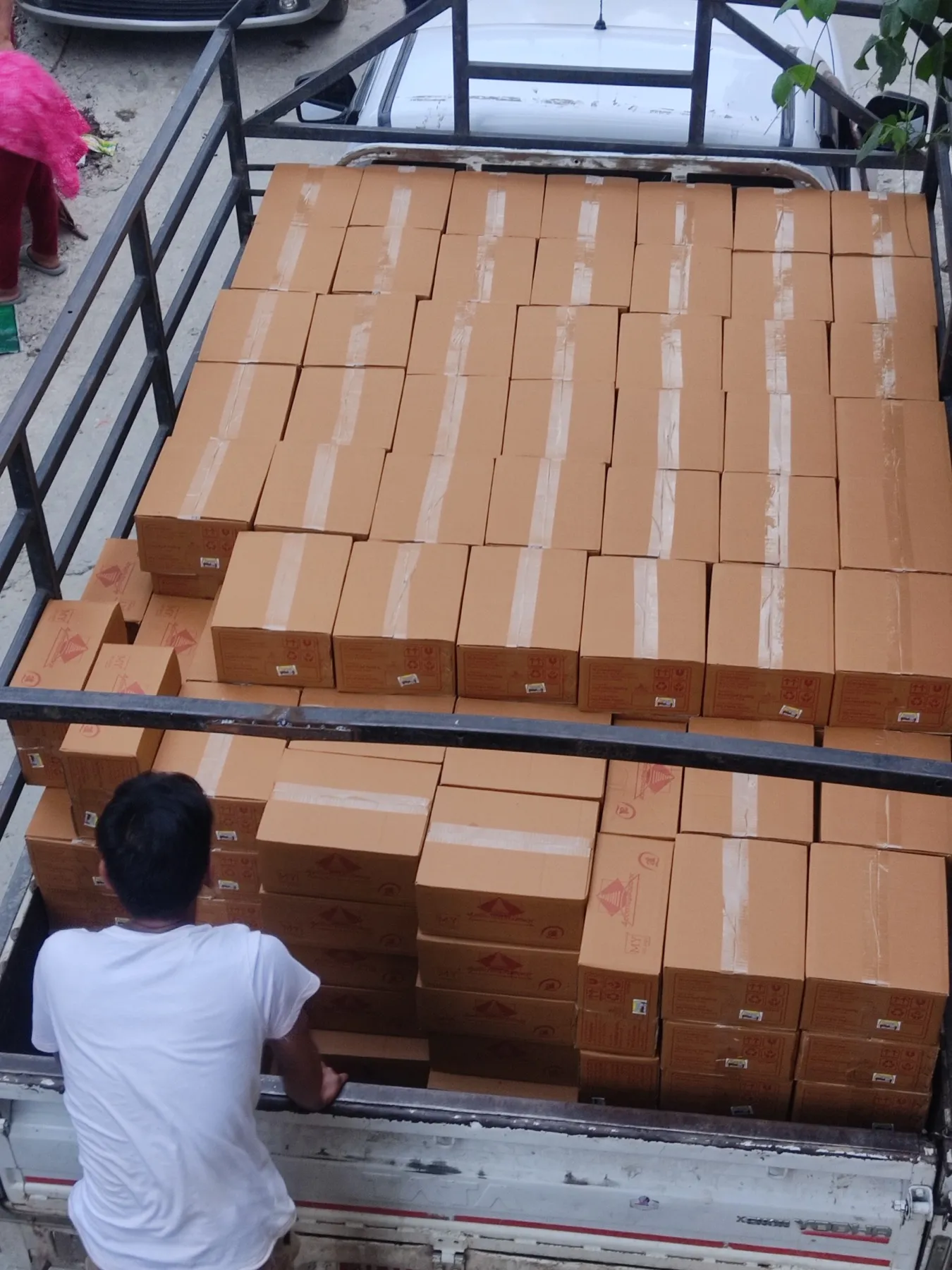
It also exposed every weakness in our operation. International orders spend months being moved, stacked, and handled. A jar that survives a drive across Kathmandu may not survive a sea shipment.
Leakage changed the business
The first call from our Australian distributor about leaking jars was terrifying. He was our first major client, and about one-third of that early shipment had been damaged. Oil had escaped into the cartons. Some jars had broken even though the boxes were marked fragile and labelled with the correct side up.
The distributor was cooperative. We split the loss equally and just about broke even on the shipment. Keeping the relationship mattered more than protecting the margin on one order.
Then we spent months treating packaging like a product of its own. We tested glass and plastic jars, seal types, heat sealing, and different oil levels. We eventually moved the entire line to glass, set a more precise oil level, and used heat sealing for a tighter finish. The change reduced leakage, but glass cost more.
We recovered some of that margin through sourcing. I negotiated a written arrangement with a vegetable supplier covering radish, carrot, mango, bitter gourd, lapsi, and local Akabare chillies. We provided cash support, guaranteed purchases, helped with fertilizer, and introduced the farmer to more buyers in the city. In return, we received preferred pricing and exclusivity within the pickle industry. The farmer could sell elsewhere, but not to another pickle manufacturer.
For Chicken Pickle, our only non-vegetarian product, we found a supplier who sold to us at roughly 20 percent below the prevailing market price. Packaging had made the product more expensive. Better supplier relationships helped absorb the difference.
That episode changed how I understood operations. A packaging problem was also a pricing problem, a supplier problem, and a customer trust problem. Fixing only the leaking lid would not have been enough.
One product, two kinds of business
Australia took My Pickle House under our own label. The United Kingdom and the United States taught us another model: white labelling.
In the UK, one distributor supplied the jars and labels, sold the product under his own brand, and named us only as the manufacturer. We produced, packed, and handed over the order. That partnership accounted for about 7,000 jars in 2022. Another UK distributor bought roughly 5,000 jars under the My Pickle House label.
The white-label work had less brand visibility, but it simplified parts of the commercial operation and produced a healthy margin. Own-label exports built the asset we cared about for the long term. We needed both. One generated reliable production volume; the other helped a Nepali brand become recognizable outside Nepal.
The US followed in 2023 with about 15,000 white-label jars. By then, my work had shifted beyond finding distributors. I was matching demand to production, negotiating with farmers, handling employee contracts, following cash flow, and making sure the documents behind each relationship were not held together by memory and WhatsApp messages.
In September 2023, I moved to the United States for my master's degree. I stopped taking an active day-to-day role and did not draw a salary, but I did not disappear from the business. I worked part time as an adviser. I drafted contracts, kept books, tracked cash, handled documents, and reached out to partners. I became, as I often describe it, my mother's arm on the computer.
My mother continued to lead production and the company on the ground. From another country, I supported the operating layer while studying. Clear ownership made that arrangement work.
Growth made the weaknesses louder
The numbers became much larger between 2022 and 2025, slowly rather than in one dramatic jump. By the end of 2025, My Pickle House worked with about 15 partners and distributors across Australia, the UK, and the US, with Australia still the largest international market. We sold roughly 50,000 jars in Australia during 2025. Company invoices and bank records show approximately $200,000 in gross revenue for the year.
In Nepal, the products now reach more than 400 stores. Current production averages about 20,000 jars per month, with capacity for as many as 100,000. The business has around 20 active employees and can reach close to 50 people during peak periods, mostly women hired from the surrounding community on contract.
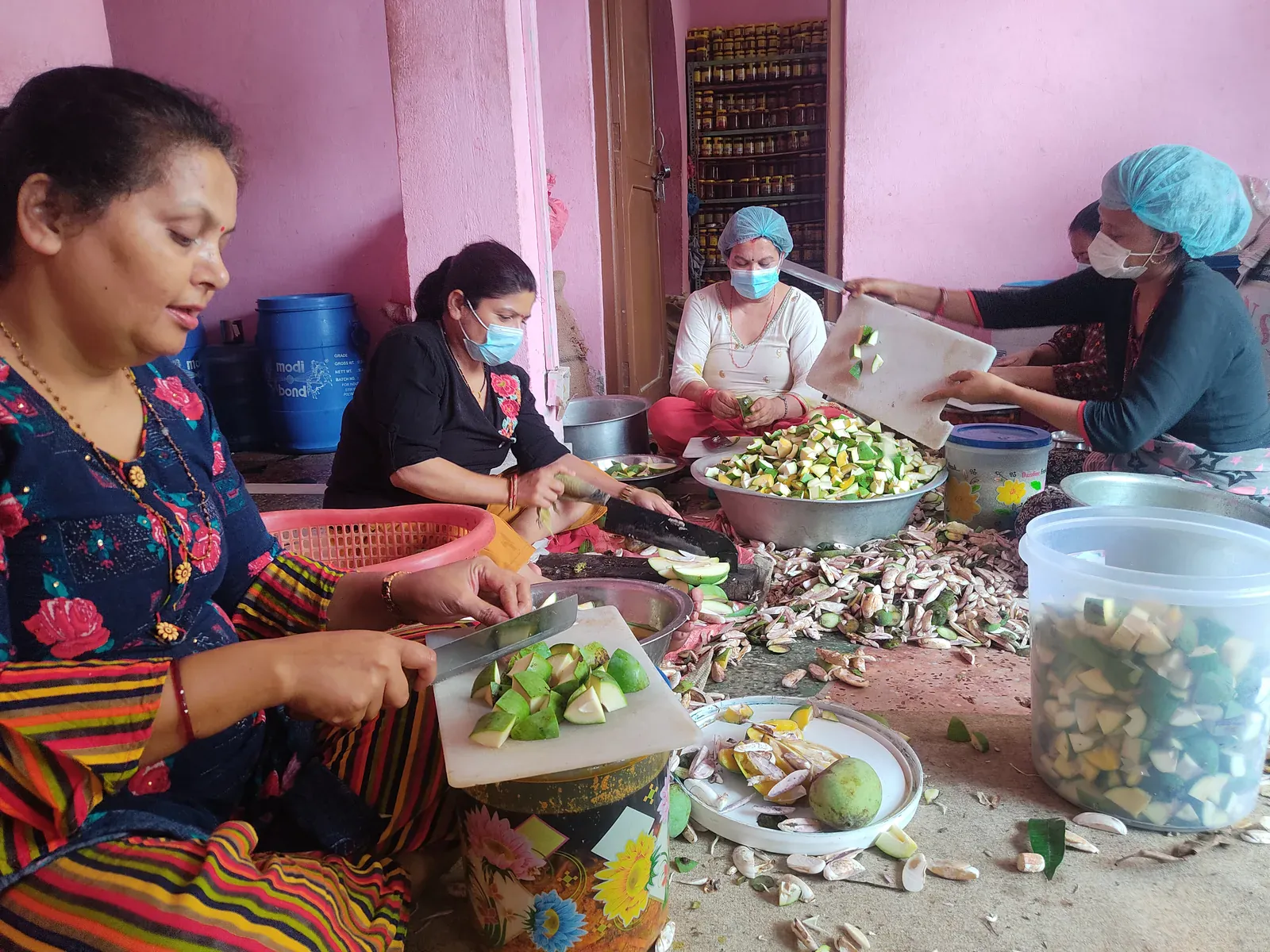
Demand can still surprise us. When we introduced Chicken Pickle in July 2025, the first stock sold out in five days. We brought in more women from the community to help fill the orders. It was the kind of problem every growing business says it wants, right until the stock is gone and customers are waiting.
We also expanded too quickly. The original three products became about 21. Looking at the sales now, roughly 20 percent of those products generate 80 percent of the revenue.
If I were building the range again, I would slow down. I would give samples to real customers before launch, ask what they liked and disliked, adjust the taste, and test again. We treated a new flavor as progress when it was sometimes only a new thing to produce, stock, and explain.
I would build the feedback loop before building the SKU count.
Before My Pickle House, operations sounded like a business-school word. Then it became shelf space, oil-soaked cartons, jars waiting for labels, a farmer's price, and cash that had not arrived yet. That was my education.
The experience also made me careful about what I claim. I did not make the pickle. My mother did. I helped turn her product into an operation that could reach shelves in Nepal and boxes bound for three other countries.
It began in one room. Today, my family is slow to give the business a third floor.